Give each food one home, put the package already in use at the front, and check the unopened reserve before adding it to the shopping list. For a weekly staple, a visible space for one replacement often works better than maintaining a pantry spreadsheet. Use a count only where you actually need several packages.
In this answer
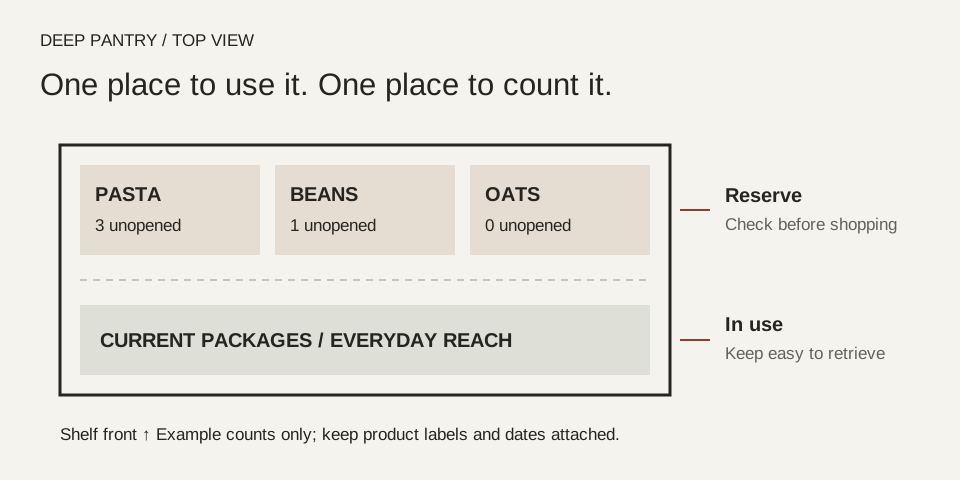
Start with the shelf that makes you buy duplicates
Empty the shelf that causes duplicate purchases and bring matching food from other cupboards. Group it by use—breakfast, dinner staples, baking or snacks—then put opened packages in front of their unopened replacements. Keep names visible without moving an unrelated category.
Set aside overlooked ingredients for a meal you plan to cook. Bring duplicate packages together before measuring for organizers. You may need less storage once scattered stock is visible.
Choose a layout that exposes the back row
Long trays work when one tray contains a narrow category you can pull forward as a unit. Put baking packets in one and breakfast bars in another, rather than filling one large tote with every small package. Place tall boxes beside shorter goods, not across their entire front. For cans, try short product-by-product rows with the labels facing the aisle. A riser helps only if the back row remains reachable below the shelf above it.
A turntable can bring bottles out of a corner, but its curved edge leaves gaps and its tallest bottle still needs room to rotate. A rectangular tray may fit a narrow, deep shelf better. Test the movement with an existing tray or the proposed organizer’s dimensions before buying.
Load the proposed container before committing. If a tray of jars needs two hands and nowhere nearby is clear to set it down, divide it into smaller groups or leave the jars on the shelf. Keep replacement food in one location per product. A separate reserve shelf is fine, but a second forgotten reserve behind the cereal recreates the original problem.
Set a reserve target for frequently used staples
For a staple you use steadily, start with the open package plus one unopened replacement. Mark the replacement's shelf space with the product name. When you open the replacement, add one to the shared shopping list. An empty labeled space then means something. If a package lasts months, you may not need a replacement at all. If several packages are used between shopping trips, choose a larger count based on those meals.
The table assumes the open package will last until the next shopping trip. It restores unopened reserves only. For a meal that also uses reserve stock, include that meal in the calculation below so you buy the reserve just once.
Scroll across to read every column.
| Product | Unopened stock | Chosen reserve target | Buy now | Where to check |
|---|---|---|---|---|
| Pasta | 3 boxes | 2 boxes | 0 | Dinner shelf, rear-left |
| Black beans | 1 can | 2 cans | 1 can | Dinner shelf, front-right |
| Oatmeal | 0 packages | 1 package | 1 package | Breakfast shelf; open package at front |
| Peanut butter | 2 jars | 1 jar | 0 | Breakfast shelf, rear-right |
Count meal ingredients and reserve stock once
For each product, calculate: planned use before the next shop + stock wanted afterward − usable stock at home. Buy zero if the result is negative. Keep the package size consistent throughout. Count a nearly empty bag as the amount it can contribute to the recipe, not as one full bag.
Two meals need three cans of beans. You have one can and want one left afterward. Buy 3 + 1 − 1 = 3 cans. Four cans will be on hand, three go into the meals, and one remains. With no reserve, buy two. This calculation already includes the reserve, so there is no second shortfall to add.
Cross off items already covered by usable food at home. When unpacking, compare dates and put the earlier-use package in front. If the planned amount will not fit, change the allocation or order before creating a second overflow location. Product storage instructions still apply after opening.
Keep the information that the packaging carries
Keep original packages inside the organizer where practical. You retain ingredients, allergens, cooking directions, storage instructions and batch details without relabeling everything. When you decant, save that information with the matching container. Finish one batch before topping it up with another so the dates and batch details stay traceable.
Keep the words next to each date, such as “Best if Used By” or “Use By.” USDA explains that many US food dates describe quality, while infant formula has separate requirements. Store opened food as directed, check damaged packaging and recalls, and keep date information with the food.
Test a container against the shelf and opening.
Compare storage optionsSources
- Utah State University Extension — Reducing Food Waste at Home ↗
Taking inventory before shopping and rotating stock. The shopping quantities in this guide are worked examples.
- FDA — Food Allergies ↗
Ingredient and allergen information on food labels.
- USDA FSIS — Food Product Dating ↗
How US food date labels differ, including infant formula requirements.
- Utah State University Extension — Food Waste Prevention Part 2: Meal Planning ↗
Planning meals around food already at home.