Find the model number, then identify the tank, water tray and any removable filter. Clean the water-contact parts with the model-approved method; keep the electrical housing dry. Remove an evaporative wick before chemical cleaning. Descaling and disinfecting are separate jobs, with a thorough rinse between them.
In this answer
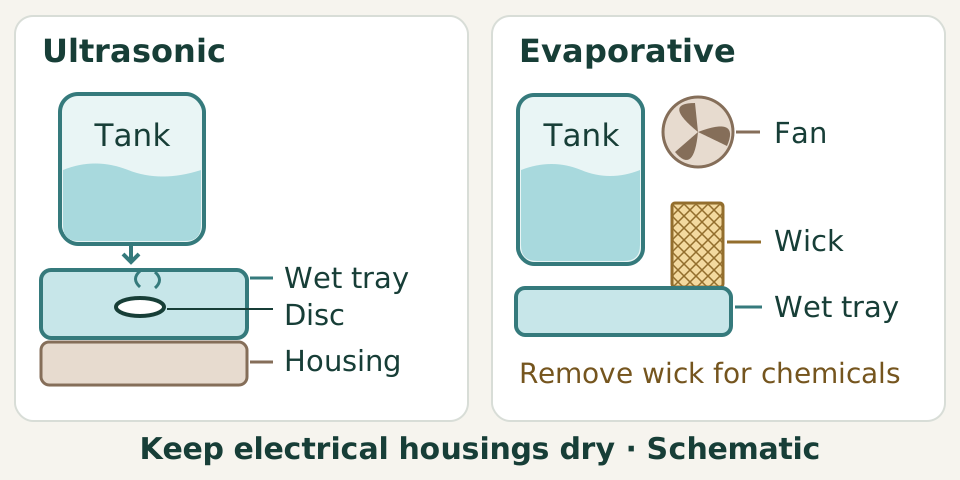
Enlarge diagram
Swipe across to see the rest of the diagram.
Identify the wet parts before taking anything apart
Turn the humidifier off and unplug it. Work on a water-resistant surface near a sink, with a soft cloth, the approved soft brush, a measuring cup and a timer. Empty the tank and accessible reservoir using the manual’s pouring direction; water must stay out of vents and controls.
“Base” can mean the wet reservoir or the electrical shell around it. A removable tray can go to the sink; that does not make the entire appliance immersible. Lift only owner-removable parts, and leave sealed housings closed.
This guide covers portable ultrasonic and evaporative units. Warm-mist models need their own cool-down procedure; furnace-mounted systems need their own service instructions.
Scroll across to read every column.
| Type | Water-contact parts to find | Keep separate |
|---|---|---|
| Ultrasonic | Tank, mist outlet, shallow reservoir, vibrating disc (transducer or nebulizer), and any float | Electrical base housing; any cartridge or filter has its own instructions. |
| Evaporative | Tank and water tray; a porous wick carries water into the fan’s airflow | Remove the wick before treating the tank or tray. Do not wash the motor/fan housing. |
Set a cleaning schedule before the tank looks dirty
For portable units, EPA recommends emptying the tank, drying accessible water-contact surfaces and refilling daily, plus cleaning every third day. The cited Levoit and Vicks manuals describe weekly cleaning. Use EPA’s more frequent interval while keeping the method compatible with your model; do not wait for an odor.
Check the tank walls, bottom and reachable water passages when emptying. Crust points to mineral buildup; film or scum may signal microbial growth. Appearance cannot identify an organism or prove the water is safe. Stop using a visibly dirty unit and clean it before the next refill.
Loosen scale without scraping the mist-making disc
Descaling removes mineral deposits. It does not replace a specified disinfection step. Use the descaler, amount and soak time approved for the particular water-contact parts. Keep excluded filters, cartridges and scent accessories out of that solution.
For example, the Vicks VUL565 manual gives this sequence. It is a model-specific example, not a recipe for every ultrasonic humidifier:
- With the unit unplugged, remove tank accessories, take off the tank cap without losing its seal, and empty the tank and reservoir.
- Add 2 US cups of undiluted distilled white vinegar to the tank. Refit the cap, swish to wet the inside, and place the tank on the base so vinegar drains into the water reservoir. Do not run the humidifier.
- After 15–20 minutes, empty both parts. Wipe loosened deposits from the nebulizer and float with a soft cloth.
- Rinse the tank and reservoir until the vinegar odor is gone, keeping water out of base openings. Do not immerse the base. If deposits stay attached, ask the manufacturer how to remove them rather than scraping the disc.
Disinfect in a separate, fully rinsed stage
If your manual calls for disinfection, complete it after removing deposits and rinsing away the descaler. The Vicks VUL565 and Honeywell HCM-350 instructions specifically separate these stages. A clear-looking tank is not a reason to skip the model’s prescribed care.
Never mix vinegar and bleach, or combine disinfectants with another cleaner. Ventilate the work area and use the protective equipment required by the product label. Do not add a disinfectant to water the humidifier will disperse into the room.
- Empty the descaling solution and rinse the permitted parts thoroughly. Keep the wick and other excluded accessories out.
- Check four items before measuring: permitted disinfectant, product strength, dilution and wet contact time. Use the humidifier instructions and product label together. If they do not agree, ask the manufacturer which current product to use; do not make a stronger mixture.
- Apply only to the specified parts and leave them wet for the specified time. Keep the unit unplugged throughout.
- Empty the solution and rinse with several changes of clean water before reuse. Finish with no cleaning odor or foam. Repeat the rinse if cleaning odor or foam remains.
Can this filter be washed? Match the part, not the word
Find the full model on the appliance label, then match the pictured part in its official manual. “Filter” may mean a porous wick, a rigid water-filter assembly, a mineral cartridge or an air-inlet screen. Permission to rinse one does not carry over to another.
Dishwasher permission is also part-specific: the cited Honeywell HCM-350 manual permits its tank, but excludes the tank cap. Levoit Classic 300S permits no dishwasher cleaning. Check the exact component before loading it.
Scroll across to read every column.
| Identified part | Allowed care in the cited manual | Decision after cleaning |
|---|---|---|
| Vicks VEV400, PWF2 wicking filter | Cool-water wetting/soaking only; no vinegar or chemical cleaning. Do not wring. Remove before tank cleaning. | Replace a hard, crusty or odorous wick, or one with reduced output. A water soak is only temporary help. |
| Levoit Classic 300S water-filter assembly | Remove by turning counterclockwise. Rinse; its descaling procedure also permits a separate 15–20-minute vinegar soak. | Rinse and dry, then secure it clockwise. Use the manual’s support route if replacement is needed. |
| Unidentified filter or cartridge | Set it aside before adding cleaning chemicals. Find its part-specific care instructions. | If the manual calls it replaceable only, replace it. Do not improvise a soak. |
Use this clean-and-dry check before refilling
Check the next run, then reduce the repeat problem
Refill through the designated opening and run the unit normally. Look for leaks and check output. During an active humidifying cycle, an ultrasonic model should produce mist. Evaporative models release invisible moisture, so a missing plume is normal. For the Honeywell HCM-350 specifically, compare the tank level over 24 hours of normal use; its manual treats a drop as evidence that it is operating. Do not keep it running to complete the check if humidity is already high.
For an evaporative unit with little water use, check current room humidity first: already-humid air can naturally reduce its output. If the room still needs moisture, check that the wick is wet and the tank and housing are seated correctly before buying another filter. Stop a leaking unit; persistent low output after these checks needs the model’s troubleshooting, not more cleaner.
If white dust returns around an ultrasonic unit, switch to water labeled distilled; bottled spring or mineral water is not equivalent. Keep room humidity at or below 50%, and reduce output or stop if nearby surfaces get damp. Window condensation needs a lower setting even when the room reading seems acceptable.
For seasonal storage, clean and dry the unit, remove used filters or cartridges as directed, and clean it again before restarting. If respiratory symptoms seem linked to humidifier use, stop using it and contact a clinician.
Keep the correct filter and cleaning method with this appliance.
Open appliance care recordsSources
- U.S. Environmental Protection Agency: Use and Care of Home Humidifiers ↗
Portable humidifier types, daily water changes, cleaning every third day, chemical rinsing, distilled water, maximum 50% indoor humidity, storage and symptoms.
- U.S. Consumer Product Safety Commission: Dirty Humidifiers May Cause Health Problems ↗
Film/scum and scale, empty-before-refill practice, protecting internal surfaces and rinsing cleaning chemicals.
- Centers for Disease Control and Prevention: Cleaning and Disinfecting with Bleach ↗
No mixing cleaners/disinfectants, ventilation, protective equipment, product labels and wet contact time.
- Levoit: Classic 300S Series User Manual (US) ↗
Water-filter removal/rinsing/vinegar soak, drying and reassembly, no dishwasher use, no base immersion.
- Vicks Humidifiers / Kaz: VEV400 Owner’s Manual ↗
Evaporative tray/wick arrangement, PWF2 cool-water care, no chemical cleaning, replacement signs and removed-wick cleaning.
- Vicks Humidifiers / Kaz: VUL565 Owner’s Manual ↗
Ultrasonic arrangement; two cups white vinegar, 15–20-minute scale-removal soak; soft-cloth wipe, no immersion/running with cleaner, separate disinfection; leak checks.
- Honeywell Plugged In / Kaz: HCM-350 Series and HCM-350B-CST Owner’s Manual ↗
Tank/cap dishwasher difference; remove wick for chemical cleaning; sequence, prewetting, invisible evaporative output, humidity-dependent water use, the model-specific 24-hour tank-level observation, and assembly checks.