If an alarm is sounding for smoke or carbon monoxide, or you cannot confidently identify the sound as a maintenance notice, get everyone outside, call 911 from outside and stay out. Do not delay to count beeps, find a manual or change a battery. Use the maintenance steps below only after the signal is confirmed and there is no emergency.
In this answer
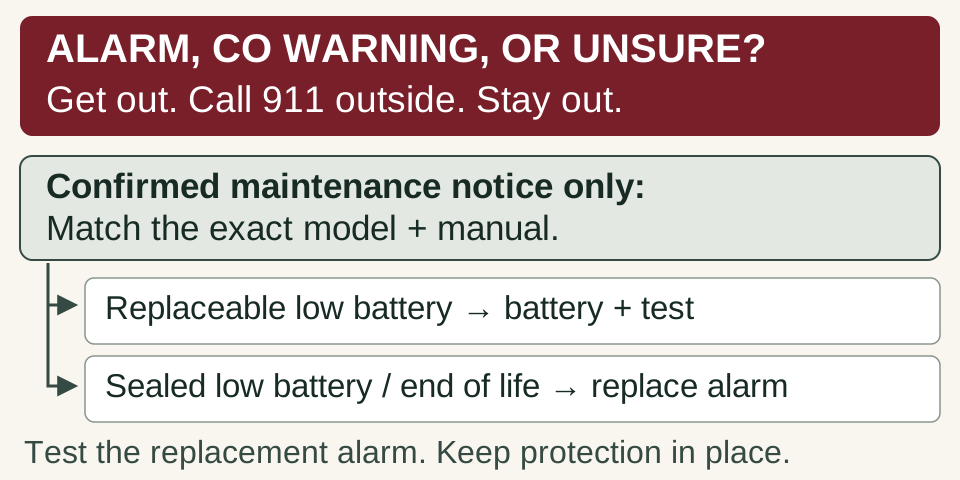
Enlarge diagram
Swipe across to see the rest of the diagram.
An uncertain alarm is an emergency, not a battery test
Repeated alarm bursts and spoken fire or carbon monoxide warnings require immediate action. A short, isolated chirp can signal maintenance, but the interval alone does not establish its meaning. Do not decide that a room is safe because you see no smoke or smell nothing: carbon monoxide is invisible and odorless.
If anyone feels ill and CO exposure is possible, leave and call 911. Do not reenter after an emergency alarm until responders say it is safe, even if the sound stops. On an interconnected system, the nearest sounding alarm may be repeating another unit’s warning; finding the initiating unit can wait.
For a clearly identified cooking nuisance, with safe conditions already established, use the model’s temporary Hush/Silence feature and clear the cooking smoke. Never remove a battery, cover the alarm or leave its circuit off to quiet it. An unexplained or returning alarm needs the emergency response above.
Confirm the model before decoding the chirp
Once emergency concerns are resolved, locate the actual chirping device. Read its face for “smoke,” “carbon monoxide,” or both. Use a phone photo or flashlight to read a safely accessible label; keep your feet on a stable stepladder, not furniture. Have the correct battery ready before opening a replaceable-battery compartment.
Copy the complete model number, date code or replace-by date, and any document revision. Search the manufacturer’s support site for that exact model. Open the sections on audible/visual signals, battery replacement, testing and end of life. Match the lights and spoken message as well as the sound. A brief recording can help support identify a maintenance notice; never stay inside to record a possible emergency.
The same model name can have an older manual with an earlier replacement deadline. If the matching revision is unclear, ask the manufacturer using the model and date code. Do not use a newer manual to extend the installed alarm’s life.
An end-of-life notice calls for a new alarm, even when the replaceable battery is fresh. Match the notice to the model’s signal table before buying batteries: a fault, a low battery and an expired sensor can sound similar.
If the label is hidden behind a hardwired unit, do not twist it off while energized to read it. Try your installation record first, or have the property manager or electrician identify it. A building fire-alarm panel or centrally serviced detector belongs with the building’s alarm service provider.
Choose the maintenance path by power and battery type
“Hardwired” describes the power supply; it does not tell you whether the backup battery is replaceable. Check the battery section instead of assuming every ceiling-mounted alarm takes a 9-volt battery.
Scroll across to read every column.
| What is installed | What you can do | When the whole alarm needs attention |
|---|---|---|
| Battery-only, replaceable battery | For a confirmed low-battery notice, fit a fresh battery listed in the manual and test. | Replace an expired, damaged or failed unit; a new battery does not renew the sensor. |
| Hardwired, replaceable backup battery | A power light does not rule out a low backup battery. Use the owner-accessible drawer and the listed battery. | Missing AC indication, wiring work or a failed interconnection calls for an electrician or property manager. |
| Sealed battery, including sealed backup | Do not pry open the case or attempt to replace the sealed cell. | Confirmed low-battery or end-of-life notice calls for replacement of the alarm, even before its expected lifetime. |
Change an owner-replaceable battery, then verify the result
- Confirm that the manual identifies the notice as low battery and permits owner battery replacement. Check its approved battery type and access procedure. If access requires electrical disconnection, unfamiliar locks or unsafe reaching, have the property manager or qualified installer handle it.
- Open only the designated battery compartment. Remove the old battery and fit a fresh, manufacturer-listed replacement with the marked polarity. Seat its connector fully and close the drawer completely; do not force a door that will not latch.
- Use the manual’s test-button procedure after the battery is installed. Warn household members first and keep your ears away from the horn. Verify the expected horn, voice and light response for that model.
- Check that the alarm returns to its normal operating indication and that the maintenance notice does not recur over its documented repeat interval. Silence by itself is not a successful repair. If the chirp remains, recheck battery seating once, then check age, dust and power as described below.
If it still chirps, check age, dust and power separately
First check the date. USFA recommends replacing smoke alarms 10 years from manufacture. Follow an earlier model-specific limit, replace-by date or end-of-life warning. CO-only and combination alarms need their own replacement instructions; do not assume one lifespan fits all. If the age cannot be established, arrange replacement rather than guessing.
Next check the approved cleaning method. For the First Alert SC9120B manual linked below, cleaning means gently vacuuming the outside with a soft brush, followed by a test; water and cleaners are prohibited. Do not open the sensing chamber, spray cleaner into the vents or paint over them. Another model may specify a different method.
A reset is not a universal long button press. The same button may test, hush or clear stored indications, depending on the model and mode. Use only the matching reset procedure after correcting the identified cause. Never operate a sealed unit’s permanent deactivation control as a reset: it ends the alarm’s protection.
For hardwired alarms, compare the visible power indicator with the manual. Record whether the problem began with an outage or appears when another appliance starts. Have an electrician investigate a missing AC indication or recurring power-related problem; do not open the electrical box, probe wires or repeatedly cycle breakers.
If the indicated fault remains after the permitted care, or the alarm fails its test, arrange replacement promptly. Renters should report the exact unit and failed check to the landlord or emergency maintenance service. If you cannot obtain working protection, ask the local fire department’s nonemergency line about assistance rather than leaving the location unprotected.
Finish with a working alarm and the right next test date
A replacement must suit the location and, where applicable, the existing interconnected system. Matching the plug shape is not enough. Have a qualified electrician handle hardwired installation and confirm the manufacturer’s compatibility list.
Test the restored or new alarm according to its instructions. For the SC9120B, each interconnected unit must be tested individually; hearing the other units respond verifies the connection, not every unit’s own operation.
USFA’s general reminder is monthly testing. The First Alert SC9120B manual linked here calls for weekly tests; use the frequency specified for the alarm you have.
Keep the alarm’s model and instructions within reach.
Use the care recordSources
- U.S. Fire Administration: Smoke Alarms ↗
Smoke-alarm care, manufacture-date replacement guidance, testing and qualified hardwired installation.
- NFPA: Learn the Sounds of Fire Safety ↗
Emergency response and using the actual alarm’s user guide. Generic sound examples are not used here to diagnose an unidentified model.
- U.S. Fire Administration: Carbon Monoxide Poisoning Prevention ↗
Carbon monoxide cannot be seen or smelled.
- First Alert SC9120B user manual ↗
External vacuum cleaning, weekly tests, individual interconnect tests and AC isolation before removal. Match the manual revision to the installed alarm.
- Kidde: What Causes Intermittent Beeping or Chirping? ↗
Battery seating, drawer closure and power-related troubleshooting. Generic reset timings and replacement ages are not applied across models.
- First Alert SC9120B product and manual resources ↗
Confirms replaceable 9-volt backup and provides the current linked manual. This is an example of an existing model, not a purchase recommendation.
- Kidde: Combination alarm end-of-life notices ↗
Why an end-of-life or sensor-fault notice is not resolved by a fresh battery.