In this guide
One estimate per product and color
Make one estimate for each combination of product, sheen, and color. Walls in the same finish can share a line. Put ceiling paint, trim enamel, primer, and a contrasting accent wall on separate lines. This prevents an order with enough total paint but too little of the color you need.
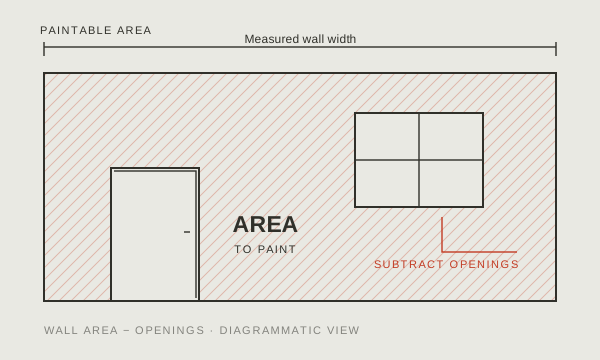
For a rectangular room, wall area is 2 × (length + width) × height. This assumes a uniform height and four rectangular walls. Add separate rectangles or triangles for other shapes rather than using a room's floor area as wall area. Measure in feet before multiplying; a mix of inches and feet produces a result that looks precise but is wrong.
Which openings will you subtract?
Example room: 12 by 10 feet, with 8-foot walls. Its perimeter is 44 feet and its gross wall area is 352 square feet. A measured 21-square-foot door opening and 15-square-foot window opening reduce that to 316 square feet. Add the door itself back to the relevant paint group if you are coating it too.
Choose which small openings to subtract and use that convention throughout. Record the net area and reserve separately. If you leave small openings in the area as an allowance, remember that when you choose any additional reserve.
What coverage figure should you use?
Coverage is normally stated per coat. Behr’s interior-paint buying guidance gives 250–400 square feet per gallon for the products discussed there. For your order, take the coverage range from your selected product’s label or technical sheet. Porous or textured surfaces and major color changes can increase the amount needed.
Calculate at both ends of the stated coverage range. If the lower coverage requires another can, budget for that possibility. Put primer on its own line with its own coverage and coat count. When checking a “paint and primer” product, look specifically for directions for bare, repaired, stained, or glossy surfaces, whichever describes your wall.
Coats first, container sizes last
Example assumptions: two coats, 350 square feet per gallon, and a 10% material reserve. For the 316-square-foot wall area, 316 × 2 ÷ 350 × 1.10 = 1.986 gallons. Round the final amount up to two one-gallon cans.
At 250 square feet per gallon, the same assumptions produce 2.781 gallons, which means three one-gallon cans. This sensitivity check is more useful than displaying many decimal places. If you can buy quarts, compare package combinations and prices, while allowing for the touch-up quantity you actually want to keep.
Preparation needs its own shopping list
Paint is only one line in the project. Add the preparation and application items you do not already own, such as compatible patching material, appropriate primer, masking supplies, floor protection, brushes, and roller covers. Check whether a planned second color requires another tray liner or roller. Small purchases can materially change the cost of a single-room project.
Write the label’s recoat interval into the work schedule along with its temperature and ventilation conditions. Before sanding or scraping paint in a pre-1978 home, read EPA’s lead-safe renovation guidance. Preparation can disturb lead-based paint.
Save the label for touch-ups
Photograph the product label and record the room, color code, sheen, and purchase date. Store leftovers according to the label. A note that says 'warm white' will not identify the finish later. Record how much paint you used too; it gives you a starting point for another job with the same product and similar surfaces.
- Estimate walls, ceilings, trim, and primer separately.
- Show coats, label coverage, and reserve as distinct inputs.
- Compare the low and high coverage cases before buying.
- Round to the container sizes you can purchase, then confirm the product instructions.