In this guide
What does “finished” include?
Write a job you can measure and finish. 'Paint one 144-inch accent wall and install the selected decorative trim' is easier to price than 'improve the living room.' Include surface preparation, finish, cleanup, and the existing items that will stay.
Keep optional upgrades on a separate list. Lighting, another shelf, or a second wall can wait until the original job is funded. Write the available cash limit at the top of the budget before pricing the materials.
Price the packages you must buy
Use the layout and cut list to count stock pieces, then estimate each paint product separately. Add the consumables you need, such as compatible filler, masking, abrasives, applicators, fasteners, and protective supplies. Check the supplies you already own before marking them covered.
Record the unit price, package size, and packages needed. Seven fasteners may require buying a box of fifty. Add delivery or collection costs and note the supplier and quote date so you can refresh the order before paying.
The costs beyond materials
Tool rental, transport, disposal, and surface protection can be easy to overlook because they are not visible in the finished project. A rental may also have minimum periods, return deadlines, or charges you need to confirm. Check the full terms before using the advertised daily rate in the budget.
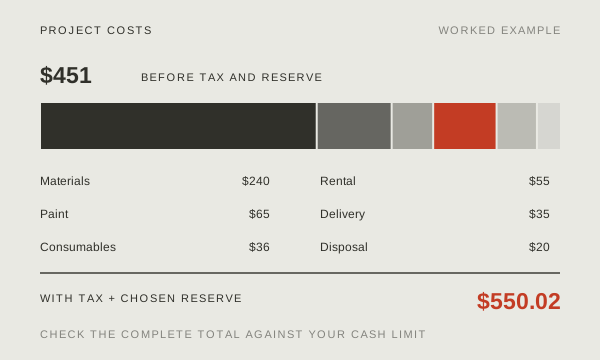
Sample budget: materials $240, paint $65, consumables $36, tool rental $55, delivery $35, and disposal $20. The subtotal is $451. For this exercise, an assumed 8% tax applies only to the first three items: $341 × 0.08 = $27.28. The base cash estimate is $478.28. Replace these sample prices and tax assumptions with your checkout amounts.
How much cash should stay in reserve?
Material waste and budget reserve solve different problems. Extra boards or paint account for cutting, application, or damaged pieces and belong in the purchase quantities. A cash reserve covers uncertainty that remains after those quantities are planned. Applying both is reasonable when they cover different risks, but do not count the same extra boards twice.
A chosen 15% cash reserve adds $71.74 to the $478.28 base, making the planning total $550.02. List what is still uncertain beside that reserve. Get a price for known additional work, such as a damaged substrate repair, instead of hoping the percentage will cover it.
Bringing a $550 plan under $500
To bring this plan under a $500 limit, borrowing a suitable tool would remove the $55 rental. The base drops to $423.28. Keeping the 15% reserve adds $63.49, for a total of $486.77.
Make the saving concrete: confirm the borrowed tool is available before removing its rental cost. Other options are a smaller covered area, a less expensive compatible material, or a postponed upgrade. Keep necessary preparation and safety provisions in the base job.
The final check before spending
Recheck the figures before demolition, custom orders, or cutting nonreturnable material. Confirm measurements, stock availability, return conditions, and any work still unpriced. If the base plan and chosen reserve exceed the cash limit, revise the scope while the room is still intact.
Track receipts in the same categories as the estimate. Keep a second total for your time if you want to compare DIY with hiring: ten hours at a chosen $20 per hour adds $200 to that comparison. The cash required at checkout stays the same.
For hired work, keep the written scope and price with the budget. The FTC's home-improvement guidance covers estimates and payment arrangements. Mark each budget line as confirmed or estimated, and revisit unresolved amounts before they become a purchase.