Remove loose grit with a soft broom, dry dust mop, or wood-floor vacuum attachment. Before using liquid, identify the finish: urethane, natural oil/hardwax oil, or traditional wax. If you cannot, dry-clean for now and blot spills promptly. A cleaner labeled for hardwood is not automatically suitable for all three.
In this answer
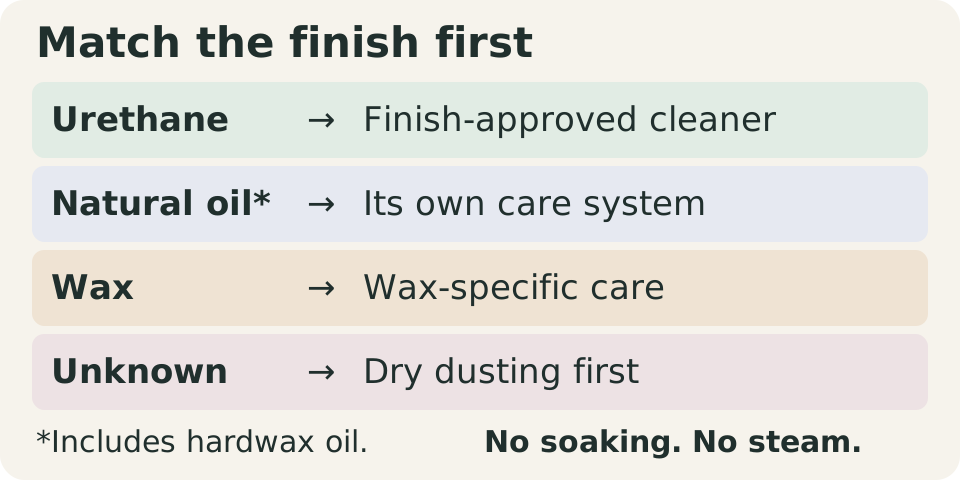
Enlarge diagram
Swipe across to see the rest of the diagram.
Find the finish, not just the wood species
Look for the flooring box, invoice, finish can, or installer’s care sheet. For a refinished floor, the most recent finish matters more than the original factory label. Ask a landlord or previous owner what was applied and whether anyone later added wax or a shine-restoring product.
Urethane is a protective surface coating. Natural oil and hardwax-oil finishes have their own care systems. Oil-based polyurethane belongs with urethane; the word oil on a finish can does not necessarily mean an oiled floor. Traditional wax maintenance is another branch, not a substitute for hardwax-oil care.
A matte appearance does not identify the finish. Neither does solid versus engineered construction. Do not scratch the surface or leave a puddle on it to find out. If records are missing, show a flooring professional the floor and any old product containers; keep routine work to dry grit removal until the care system is identified.
Choose the routine that belongs to your floor
These examples show why instructions conflict online. Use the row matching your confirmed finish, then the directions for that particular floor. A newer coating or polish can change the surface you are actually cleaning.
Scroll across to read every column.
| Confirmed finish | Routine after removing grit | What changes the method |
|---|---|---|
| Urethane / polyurethane | Use the floor maker’s approved cleaner with a soft pad. For applicable Bruce no-wax floors, lightly mist Bruce Hardwood & Laminate Floor Cleaner and wipe clean and dry. | Bruce excludes water mopping and does not require a rinse. Do not add wax, oil soap, vinegar, or household detergent. |
| Natural oil / hardwax oil | Use that finish system’s cleaner. Rubio Oil Plus 2C permits a non-dripping damp mop with clean water, or its Surface Care Spray / correctly diluted Soap. | Wait until the installed finish is ready for liquid cleaning. Do not transfer this water permission to other brands or to traditional wax. |
| Traditional wax | Dry-dust or vacuum; use the identified wax-floor care system for soil and maintenance. | Legacy Bruce Dura Satin instructions exclude water, water-mixed cleaners, and Bruce’s no-wax cleaner. Buffing or renewal must match the wax system. |
| Unknown, worn through, or visibly peeling | Dry-remove loose grit and blot spills without rubbing the damaged area. | Identify the finish or arrange a repair assessment before applying a liquid cleaner or restorer. |
Clean a small area before committing to the room
Set out a soft broom or wood-floor vacuum head, a clean microfiber or terrycloth pad allowed by your floor’s instructions, spare pads, a dry towel, and the correct cleaner. Turn off a rotating beater bar. Check the vacuum wheels and mop pad for trapped grit.
The steps below are for an intact, identified finish that permits the selected liquid-cleaning method. A freshly applied finish needs its own return-to-cleaning instruction; being dry enough to walk on does not establish that it is ready to wash.
- Remove loose debris first, including along the baseboards. Blot a spill promptly with a dry soft cloth rather than spreading it across board joints.
- Check the bottle: ready-to-use or concentrate? Use ready-to-use cleaner as supplied; measure a concentrate exactly as its label directs. Do not mix cleaners. Bona, for example, sells both types, so the brand name alone does not tell you the dilution.
- Try the permitted routine on a small, inconspicuous, intact area. Apply only the amount specified and wipe with the clean pad. For Bruce’s spray-and-wipe method, remove excess with the dry towel instead of following with a bucket-water rinse.
- If using Rubio Universal Soap concentrate, follow its matching instructions, including the damp clean-water rinse. Wring the pad thoroughly and leave no standing liquid. Its ready-to-use Surface Care Spray has a separate application routine.
- Let the patch dry completely. Compare it with adjacent flooring in the same light: soil should be reduced without new haze, color change, tackiness, or a different sheen. Stop if the finish changes; otherwise continue in small sections, switching dirty pads for clean ones. Keep foot traffic off until dry.
Water and steam are different decisions
Skip the steam mop. NWFA advises against steam and wet mopping, and Bruce specifically excludes both water and steam from its hardwood routine. A device advertised for sealed hard floors does not override the installed flooring’s care restrictions.
A damp method authorized for a particular oil finish means a wrung-out pad, not water collecting in seams or sitting beneath a bucket. Rubio’s allowance for damp cleaning does not make a wood floor waterproof. Wipe excess immediately; do not leave a wet mop parked on the boards.
Do not substitute dish soap, vinegar, or a general degreaser just because the floor feels greasy. Bruce excludes those household approaches, and a product intended to add shine is not interchangeable with a cleaner. Check the surface restrictions as well as the front-label promise.
For a sticky floor, check the cleaner before scrubbing harder
Write down what was last used: exact product, dilution, whether it was a cleaner or polish, and whether the pad was already dirty. Note whether stickiness covers the whole mopped area or only a food-spill spot. Those observations help choose the next check; they do not identify the residue by themselves.
On an intact, identified finish, repeat one small comparison using the approved routine and a fresh pad. Correct a dosing error first. Rubio’s Universal Soap sheet specifically warns that too much soap or overly frequent use can leave a dirt-trapping layer. More cleaner can therefore make the same problem persist.
Scroll across to read every column.
| Dry result | Next useful action |
|---|---|
| Less tacky, with unchanged color and sheen | Some removable material was present. Continue the same permitted method in small areas with fresh pads. |
| Still sticky or streaked, but no new surface change | Stop repeating the same wash. Ask the previous product’s manufacturer for a removal method compatible with the floor finish; Bona recommends this route for other makers’ products. |
| New dullness, softened surface, peeling, or finish-colored transfer | Stop liquid treatment and abrasion. Keep the product label and dry photos for the finish maker or flooring professional. |
| Sticky immediately after new finishing or recoating | Ask the installer about curing and application before cleaning again. Do not try to wash an uncured finish into readiness. |
Know when the next job is finish or moisture repair
An unchanged dull patch is not proof that the finish is ruined, and a cleaner cannot replace missing coating. Do not use steel wool, a scouring pad, solvent stripping, or another layer of polish to force a result on an unidentified surface.
On a known Rubio oil finish, persistent dry-looking or rough traffic areas can need the system’s maintenance treatment. On a urethane floor, worn coating may need recoating or other repair. These are finish jobs with their own preparation and cure requirements; confirm the repair before buying a restorer.
Raised board edges with lower centers are cupping, which NWFA associates with moisture gain. If boards change shape or remain damp, stop mopping and check for an active water source near appliances, doors, or plumbing. Arrange a flooring assessment rather than trying to clean the shape away.
For that assessment, provide a wide photo of the dry floor and a close-up, the finish identity if known, products already used, and what changed after the test. If restoration is proposed, ask each contractor to separate residue removal, finish preparation, recoating or sanding, and board replacement in the written scope.
Keep the clean result without washing more often
Use non-staining, floor-approved mats at entryways and furniture pads beneath chairs. Check under mats for trapped grit or dampness instead of assuming they protect whatever is underneath.
Save the finish name and the working cleaner routine together. If the dry floor is clean, feels normal, and has its usual sheen, stop. A low-sheen finish does not need a glossy top layer to count as clean.
If cleaning reveals a repair, compare the same work.
Compare repair scopesSources
- National Wood Flooring Association: Maintenance ↗
Routine grit removal, immediate spill care, finish-specific cleaner selection, and avoiding wet and steam mops.
- National Wood Flooring Association: Wood Floor Finishes ↗
Film-forming finishes versus penetrating natural oils/hardwax oils; sheen is a separate characteristic.
- Bruce / AHF Products: Hardwood Flooring Cleaner and Floor Care ↗
Bruce spray-and-wipe routine; no water mopping, no steam, incompatible household cleaners; wipe excess and do not rinse.
- Bruce / AHF Products: Easy Care Steps: Hardwood Floors, including Bruce Dura Satin Wax Finish ↗
Dura Satin wax floors: dry grit removal; no water, water-mixed products, or Bruce Hardwood & Laminate Floor Cleaner; buffing/wax care distinct from no-wax floors.
- Rubio Monocoat USA: How to Care for Your Rubio Monocoat Finished Floor ↗
Oil Plus 2C: allow cure before liquids; controlled damp water cleaning, matched Soap/Surface Care Spray; dry rough wear can call for maintenance.
- Rubio Monocoat: Universal Soap Technical Data Sheet ↗
Concentrated soap application, damp clean-water rinse, complete drying, and residue from excessive concentration/frequency.
- Bona US: Bona Floor Cleaner FAQs ↗
Hardwood cleaner is for unwaxed, unoiled polyurethane-finished floors; ready-to-use versus concentrate; clean mop pads to avoid streaks; contact previous product maker about removal.
- National Wood Flooring Association: Problem Prevention ↗
Moisture changes can swell/cup wood; raised board edges with lower centers describe cupping; furniture protection.