First check whether water is actually pooled in the drum or the clothes are simply wetter than usual. Record the cycle status and error code before changing anything. Standing water sends you toward drainage checks; an empty drum with wet laundry calls for spin and load checks. Leave a front-loading door and pump-filter cap closed while water is trapped.
In this answer
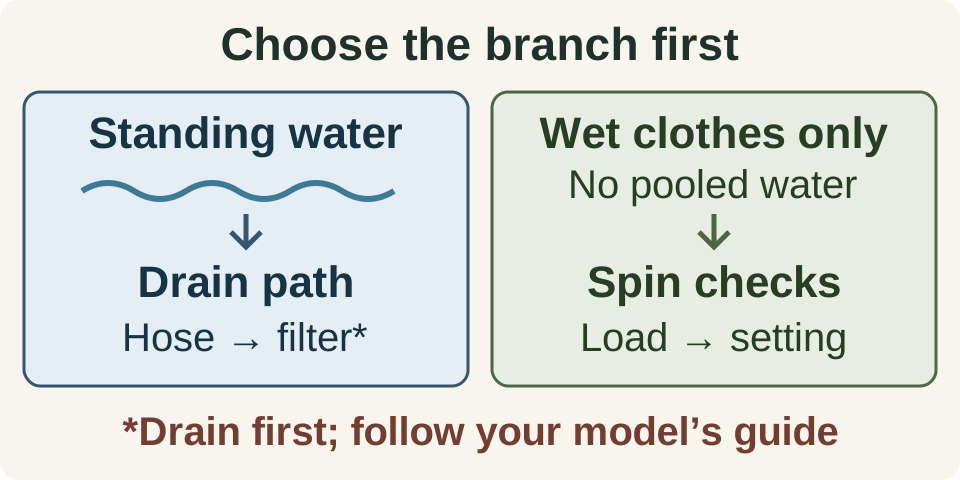
Enlarge diagram
Swipe across to see the rest of the diagram.
Read the display before opening the washer
Photograph the error and note the selected cycle. Is the machine finished, paused, or still working through a programmed stage? A paused load is not evidence of a blocked pump. Check the model’s cycle guide before canceling an intentional soak or interrupting a routine pause.
Keep the door closed if you can see water behind front-loader glass. On a top loader, inspect the tub only after the lid unlocks normally and the basket stops. If the load or dark glass hides the water level, treat it as uncertain rather than loosening a filter to find out.
Scroll across to read every column.
| Observation | Start here | What it does not prove |
|---|---|---|
| Water pooled in the drum after the cycle stops | Check the displayed fault, controls and visible drain hose. | A drain fault does not identify a failed pump. |
| No pooled water; clothes are heavy or dripping | Check spin setting, load balance and whether the cycle completed. | Wet clothes alone do not prove a drain blockage. |
| Controls will not respond or lid/door will not latch | Check the model’s control-lock setting and visible clothing caught at the closure. | Do not force the door or bypass its interlock. |
| Water backs up from the standpipe or laundry sink | Stop the cycle and arrange a household-drain check. | A washer filter cannot clear a blocked building drain. |
If only the clothes are wet, correct the spin conditions
A low-spin or no-spin choice may be doing exactly what it was set to do. Select a higher spin only if the garment care labels and cycle guide allow it. Delicate fabrics do not need the same result as cotton towels.
Once the lid or door opens normally and all movement has stopped, loosen a tightly packed load and redistribute a bunched item. For a top loader, follow its loading pattern around the basket; for a front loader, separate a tangled bundle. Follow the model’s bulky-item guidance rather than adding random items to an already full machine.
Close the lid or door without trapping fabric. Try the model’s spin or Drain & Spin option once. Improvement means the cycle completes and the load is noticeably less waterlogged. If the machine bangs, walks, or repeatedly refuses to spin, stop; it needs a loading, leveling or service check, not more attempts.
Persistent foam or a suds code changes the plan. Follow the model’s suds-recovery instructions and add no more detergent. Excess suds can affect both draining and spinning. If a drain fault or standing water remains afterward, continue below.
For trapped water, check the hose without disconnecting it
Look up the recorded code with the full model number. LG’s OE code means the washer could not drain; it is not a pump-replacement instruction. A door or lid fault needs its own correction before a drain command can work.
Before hands-on checks, turn the washer off and disconnect power from a dry, safely reachable location. If the appliance is standing in water, keep away from it and the plug; get qualified help to isolate power safely. Stop for a burning smell, damaged wiring or repeated breaker trips.
Use a flashlight to inspect the visible drain hose. Remove an object pressing against it and ease an accessible kink without tugging connections. Leave clamps, the cabinet’s hose holder and its screws in place. Do not pull out a full, stacked or tightly fitted machine to reach the back.
Compare the hose’s height, insertion depth and securing method with the installation instructions for this model. A standpipe connection must not be sealed airtight. Do not borrow another brand’s measurements or lower the outlet to floor level to force drainage. Photograph an inaccessible or questionable installation for the installer.
If the standpipe or laundry sink has backed up, stop testing and contact a plumber or property manager. Do not add drain-opening chemicals to the washer or run its detached outlet into a bucket. Those shortcuts introduce spill and chemical risks without identifying the fault.
Make one controlled drain attempt
With the hose still secured, all covers closed and the floor dry, reconnect power. Use the drain command specified for the model, often Drain & Spin or a spin-only option. Do not guess a button combination. If controls are locked, use the documented unlock command first.
Watch for discharge where it is safely visible and for the water level to fall. Listen without opening anything: humming alone is not proof that water is moving. If the water clears, let the cycle finish and check the result below. Stop for a leak, backup or abnormal noise.
If water stays put or the same fault returns, stop restarting. Move to a documented owner-draining procedure, if one exists. Repeated resets can erase a useful display without clearing the obstruction.
Open a filter only after the model’s safe draining step
Find “emergency drain” or “drain pump filter” in the matching owner manual. You need an owner-accessible opening, a way to catch the retained water, and reassembly instructions. A removable lint screen inside a top-loader basket is not automatically a drain-pump filter. Samsung’s cited guidance excludes top loaders; Whirlpool says access varies and some models have no owner-accessible filter.
Without a documented owner procedure, leave panels and hoses installed and arrange service. Do not tilt the washer, remove its cabinet or reach underneath it. Never use a manual door release to empty a water-filled front loader. A release is a separate, model-specific operation; keep it untouched until water is drained, the contents are cool and the manual’s conditions are met.
Let hot wash water cool before draining. Samsung specifies about an hour after a hot cycle; elapsed time alone is not permission to handle water that is still hot. Gather towels, a shallow pan that fits below the drain opening, a larger container for emptying the pan, and a soft brush.
- For the LG WM8900HBA arrangement described in its manual, turn off and unplug the washer, then open only the small pump-filter access cover.
- Position the pan under the small residual-water hose. Unclip the hose and remove its plug, keeping the outlet over the pan. Do not stretch the hose out of the cabinet.
- Drain in controlled batches. Refit the hose plug before emptying the pan, then resume. Keep the larger filter cap closed until the retained water has drained. If water remains in the drum but the small hose will not flow, stop and request help.
- Place a towel beneath the filter. Turn the filter counterclockwise as the manual shows, remove collected debris, and clean the removed filter with warm water and a soft brush. Do not probe blindly into the pump or force a stuck cap.
- Refit the small hose plug and clip, reinstall the filter securely clockwise, and close the access cover. Check both closures before restoring power; incorrect assembly can leak.
Check drainage and spin as two separate results
The LG sequence above is an example, not a universal filter-removal method. Some Samsung caps require a push-and-turn release and a specified final position. If the parts differ from the drawing in your model’s manual, stop before forcing them.
After safe draining and reassembly, dry the surrounding floor and follow the model’s normal unlocking procedure. Remove all laundry before Tub Clean. If the lid or door will not open normally, do not start that cycle; use the service branch below. LG’s cited OE guidance calls for Tub Clean after filter care. Use the matching manual’s cycle and cleaner instructions.
The post-care test must demonstrate pump-out. If you emptied the washer through its emergency hose, use the applicable manufacturer’s test that takes in water and then drains it. A drain-only or spin-only run starting with an already-empty drum is inconclusive. If no suitable test is documented, ask support; do not hand-fill the drum or detach the hose to create a test.
Stay nearby during the test. Confirm water enters and then actually leaves: watch a visible drum level fall or discharge at a safely visible outlet, keeping the lid or door closed and the hose secured. The cycle must finish normally with no pooled water, leak, backup or drain code. Stop for a leak or backup. If water movement cannot be verified safely, ask support for the model’s check rather than calling the result a pass.
After drainage is confirmed, check that a modest, balanced, fabric-appropriate load completes its spin. An empty drum with clothes still dripping sends you back to the spin branch; it does not justify reopening a clean filter.
Call appliance service if the owner drain route is unavailable, the cap or seal is damaged, the door remains locked after safe draining and the normal release procedure, or the fault returns after these checks. Give the model, exact code, whether water remained, and the correction you tried. Report household-drain backup to the plumber or property manager instead.
Once drainage and spinning work, lingering odor is a separate cleaning job. Do not keep running cleaning cycles to chase water that will not leave.
Keep the model, code and completed check together.
Open appliance care recordsSources
- LG USA: What is a Front Load Washing Machine OE Error Code? ↗
OE meaning; external hose and spin-only checks; residual-water hose, filter cleaning, reassembly and follow-on test. Button instructions apply only to matching controls.
- LG USA: WM8900HBA owner’s manual ↗
Printed pages 4–6, 36–37 and 39: power/standing-water hazards; Tub Clean requires removal of all laundry; owner drain-hose/filter sequence and reassembly. Model-specific example.
- Samsung US: Samsung washing machine will not drain ↗
Hose inspection, retaining-holder warning, model-dependent installation and unresolved test requiring service.
- Samsung US: How to clean your Samsung washer ↗
Pump-filter section: cooling after hot cycles, collection containers, drain before filter removal, cap differences and resealing. Front loaders only.
- Whirlpool US: Why is my washing machine not draining? ↗
Settings, lid closure, variable filter access and professional help for inaccessible drainage arrangements.
- Whirlpool US: 8 possible reasons why your washing machine is not spinning ↗
Wet clothes versus standing water; low/no spin, imbalance, overloading, excess suds, power interruption and door/lid closure.
- Whirlpool: High-Efficiency Top-Loading Washer Use and Care Guide W11545828C ↗
Printed pages 3, 8–9: cycle status, normal pauses, loading and household-drain backup. Commercial-family guide; its button timing and hose measurements are not generalized.
- Samsung US: Samsung washer door is locked ↗
Normal lock and control-lock states, water retained behind front-loader door and emergency drainage before release.