Turn off other water uses, then compare hot and cold at the weak tap and two others. One weak fixture points you toward its outlet or supply; weak hot water at several taps calls for a hot-water-system check; weak hot and cold throughout the home calls for a supply and leak check. Start with the matching branch below.
In this answer
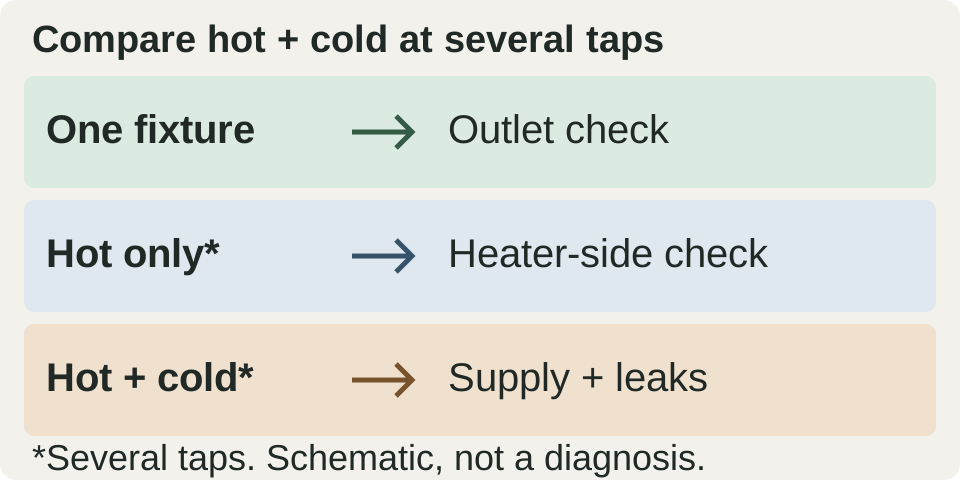
Enlarge diagram
Swipe across to see the rest of the diagram.
Make a quick map before taking anything apart
This guide covers household faucets and showers, mainly in homes on public water. In an apartment, report a multi-fixture problem to building management. For a private well, use the fixture comparison but take a whole-home problem to a well contractor; pump controls and pressure-tank adjustments are outside this guide.
Use a notepad, flashlight and towel. Stop the washer, dishwasher and irrigation, and wait for toilets to finish filling. Test each tap separately, cold first and then hot, keeping hands clear of potentially scalding water. Add another room if the first two results disagree. If several weak fixtures cluster in one area while others stay normal, record that group for the plumber; a shared branch may need investigation. An outdoor faucet is useful only if it is normally in service; do not reopen a winterized or possibly frozen line.
A weak stream describes flow, not necessarily low pressure in the pipes. A clogged outlet can reduce flow even when supply pressure is normal. Compare each fixture with its own usual performance, rather than expecting a bathroom faucet to match a tub spout.
One fixture is weak: check the outlet first
If both hot and cold are weak at one sink while other taps work, inspect the aerator, the small screen assembly at the spout tip. A sudden change after plumbing work makes trapped debris worth checking. A gradual decline can also come from accumulated deposits.
Have a small bowl, soft brush and the correct aerator key ready. Some aerators are recessed; some spray heads do not have a separately removable aerator. Identify that part before using a wrench.
- Turn the faucet off and cover the drain so small parts cannot fall in. Remove only the serviceable aerator, following the faucet instructions. Stop if it is stuck or the spout starts twisting.
- Keep the gasket and screens in their original order; a photo helps. Rinse loose grit away and gently brush the screen. Use a mineral-removal soak only when the manufacturer permits it for that part; keep cleaner off surrounding finishes.
- Reinstall the complete assembly, including its gasket, and tighten as directed. Run cold and hot separately, then check for leakage around the aerator. A steady, usable stream without spray at the joint is the goal.
- Pull-down kitchen faucet: on the Moen designs covered by its low-flow guide, the screen washer sits between the hose and spray wand. Secure the hose with a towel before removing the wand so it cannot retract. Rinse the screen and reinstall it in the same position. Use your model instructions for other designs.
- Only hot or only cold is weak at this fixture: compare that same temperature at another tap. If it is normal there, inspect the affected faucet’s visible supply hose for a kink and note any recent valve work. Do not force an old shutoff or disconnect a supply line for this check.
- Only the shower is weak: clean its accessible spray openings or serviceable inlet screen using the showerhead instructions. If the arm moves in the wall or the problem remains, stop there; have a plumber distinguish a showerhead restriction from a valve or branch-supply problem.
Hot water is weak at several taps
With cold flow normal, the shared hot-water path needs attention. Look around the water heater and accessible connections for dripping or pooled water, without opening covers or touching hot pipes. Note whether the change followed heater service. Give that information to the installer, plumber or property manager.
If the hot-side flow stays weak at several outlets after their screens are clear, arrange service rather than replacing every faucet cartridge. This pattern narrows the search; it does not prove the tank contains sediment. Do not drain the heater, open its relief valve or adjust temperature as a pressure fix. A strong stream that stays cold is a heating problem, a different symptom from low flow.
The whole house is weak: use the timing
Sudden drop: check your utility’s current outage notices, then ask whether a nearby home has the same new problem. Report a sudden widespread loss or no water to the utility; in a shared building, contact management. Follow any drinking-water advisory even if the flow returns.
If only your home is affected, look for visible water, running-water sounds when taps are off, and unusually wet ground along the service route. For an active indoor leak, use your known, safely accessible house shutoff and call for help. Do not delay for a meter test or enter water near electrical equipment.
After recent plumbing work, ask whether the house shutoff was fully reopened. A partly closed valve, failed pressure-reducing valve, or malfunctioning softener can affect the whole supply. Record any filter or softener service date and error message. Use the maintenance instructions for that filter or softener model; do not open a pressurized filter housing or turn unfamiliar bypass controls.
Gradual decline: start with overdue filter maintenance and the outlet checks. If those do not restore flow, ask a plumber to assess the regulator and pipe restrictions. Older galvanized piping can narrow internally. Turning up a regulator is not a way to establish which component is at fault.
Only weak while another fixture runs? Repeat once with the other use stopped and record both conditions. A normal-looking idle pressure reading does not settle a flow problem under demand. Ask the utility what pressure is expected at your address; ask the plumber to compare conditions while water is running before proposing a booster or regulator adjustment.
Check for hidden water use if there is no visible leak
If you have a safely accessible meter dedicated to your home, photograph its reading with all water use stopped. Include automatic users such as irrigation and ice makers. EPA recommends checking again after two hours with no water used. A changed reading suggests a leak or an overlooked water user; it does not identify where the water went.
If you cannot keep water use off, have a shared meter, or cannot safely access it, ask the utility or manager for help. Do not operate the utility’s meter valve. Share unexplained movement with the plumber even if the pressure improves. A stationary reading during this check does not rule out an intermittent leak.
Retest the same way, then hand over the useful details
Repeat your original fixture comparison after each change, with other water uses off. For a more objective before-and-after check, time cold water filling the same marked container at the same handle setting. Record seconds to the mark; you do not need to convert that result into pressure.
For example, a 1-quart container filled in 20 seconds equals 0.75 gallons per minute: 0.25 gallon × 60 ÷ 20. That is an arithmetic example, not a pass/fail threshold. EPA’s technical sheet specifies a maximum of 1.5 gpm at 60 psi for WaterSense-labeled bathroom faucets, with some models rated lower. Check the fixture’s marking; do not remove a flow restrictor to chase a stronger stream.
If flow improves, check the reassembled outlet for leaks and try normal household use. If the weakness quickly returns, or another tap is still affected, report that remaining pattern rather than repeating the same cleaning. Use the table as a short service note.
Scroll across to read every column.
| Record | What to write |
|---|---|
| Where and temperature | Kitchen cold/hot; bathroom cold/hot; other room. Mark usual, weak or no flow. |
| When it changed | First noticed; sudden or gradual; recent repair or outage; whether another water use triggers it. |
| What you tried | Which outlet was cleaned; same-container fill time before/after; leaks or meter change. |
| Equipment and readings | Faucet/heater model; filter or softener details. If pressure was measured, record psi, test location and whether other water was running. |
| What remains | Example: kitchen cold recovered after cleaning; hot still weak at both sinks. |
If the repair needs a plumber, compare the same scope in each quote.
Compare contractor quotesSources
- Portland Water Bureau: Troubleshooting water pressure and flow ↗
Distinguishes flow from pressure, maps affected fixtures and hot/cold, supports hot-water visual checks and utility/property-manager escalation.
- San Jose Water: Water Pressure ↗
Sudden versus gradual causes, valve/softener/regulator problems, galvanized restrictions and professional regulator adjustment.
- Moen: Kitchen Faucet: Low Flow ↗
Outlet versus temperature-specific restrictions and the spray-wand screen/towel procedure.
- Delta Faucet: How to Fix Your Flow ↗
Aerator removal, ordered small parts, screen cleaning, gasket replacement and showerhead screen care.
- US EPA WaterSense: WaterSense Labeled Homes: Bathroom Sink Faucets ↗
1.5 gpm at 60 psi rating, lower-rated models, labeled flow rates and timed collection.
- US EPA WaterSense: Fix a Leak Week ↗
Meter check over a two-hour interval without water use, plus visible leak checks.